Brighton for Creative Inspiration
Brighton has long attracted artists, designers and entrepreneurs searching for fresh perspectives. Colourful murals, independent bookshops and small galleries create an atmosphere where ideas seem to circulate freely, making the city a rewarding destination for professionals who enjoy discovering creativity beyond the office.
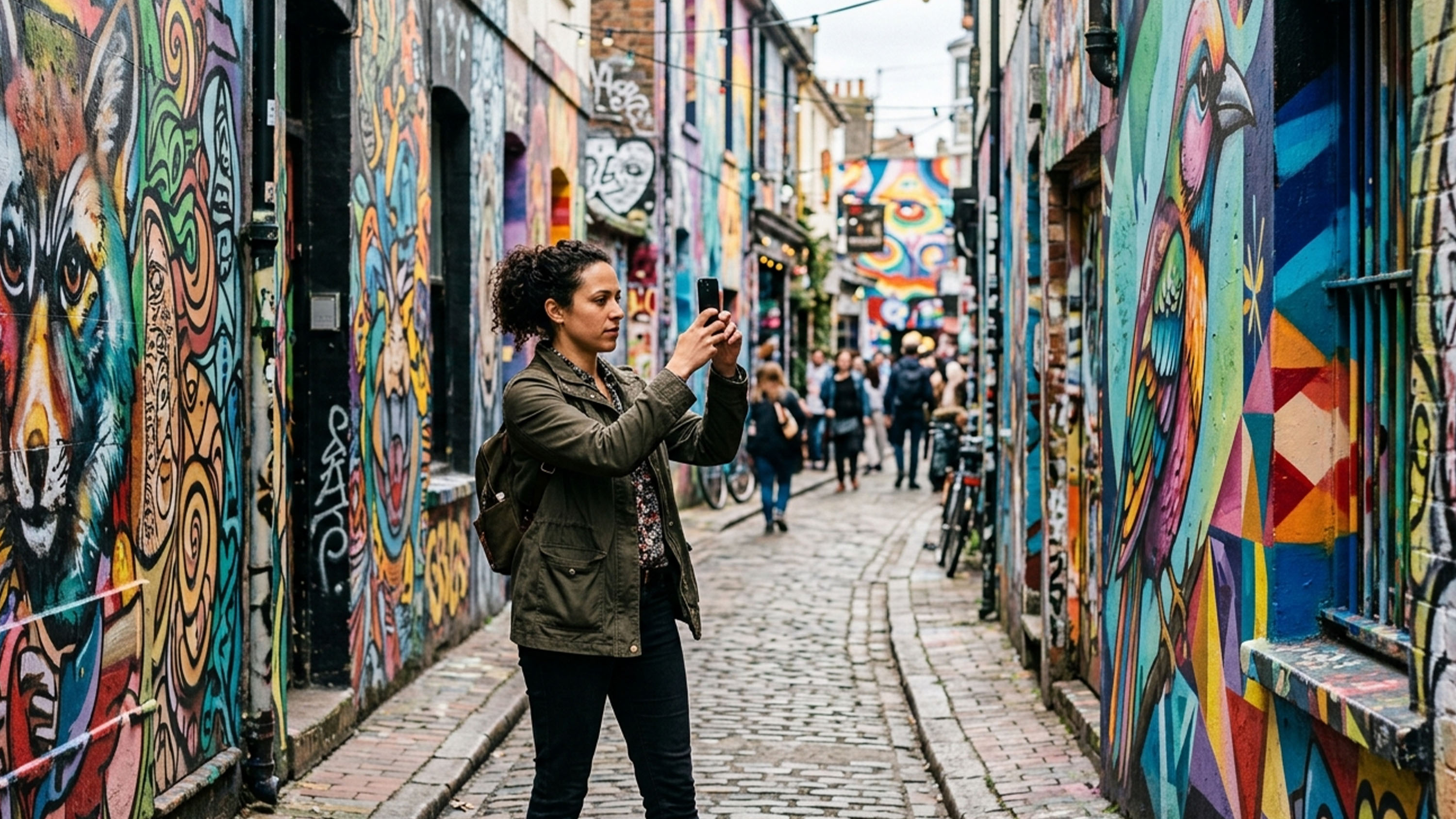
Brighton has always given the impression of being slightly overstocked with ideas. They appear on walls, in shop windows, in menus, in the way people dress, in the names above small doors that clearly lead to studios, agencies or projects not yet fully explained. For entrepreneurs, designers and tech professionals passing through on work, this matters. A city can stimulate without becoming exhausting, and Brighton often does exactly that. It sends little signals that invention is not a specialised activity but a habit of daily life.
Creative inspiration is often described as though it arrives in a single flash. In practice, it is more commonly assembled from atmosphere, observation and the accidental juxtaposition of one thing with another. Brighton is good at supplying those ingredients. It does not hand you a breakthrough on a plate. It simply creates a setting in which the mind becomes more curious, less dutiful and more willing to follow a thought somewhere unexpected.
Start in North Laine
If there is a district that explains Brighton’s creative reputation better than any keynote speech could, it is North Laine. Walk here for half an hour and you are confronted by evidence of people making things constantly: clothes, coffee, posters, playlists, cakes, comic identities for tiny businesses that somehow look more vivid than the branding of global firms. The neighbourhood still feels lived rather than packaged, which is crucial. Inspiration rarely comes from places that have been over-tidied.
For founders and freelancers in particular, North Laine provides a useful reminder that scale is not the same as vitality. Some of the most memorable businesses here are small, opinionated and distinctive. They know what they are. That clarity can be contagious. After a morning spent discussing growth charts or product roadmaps, a walk through these streets reintroduces the value of character.
Rooms that slow you down
Brighton’s galleries are not only places to look at art. They are also places where the pace of perception changes. Brighton Museum & Art Gallery is especially valuable in this respect, because its collections and displays encourage a kind of lateral wandering rather than a single linear lesson. You enter with one subject in mind and leave having been caught by several others.
Fabrica offers a different sort of stimulus. Housed in a former church, it has the atmospheric seriousness that contemporary work often benefits from, where the space itself sharpens attention. For professionals used to spending their days in environments designed entirely around efficiency, these rooms can feel radical simply because they insist that attention be given to something that cannot be converted immediately into a task.
Books, performances and neighbouring thoughts
Creative cities are rarely defined by one discipline alone. What makes Brighton fertile is the way different forms sit alongside each other. A morning may begin with strategy, drift into visual prompts from a gallery, then end in a venue such as Komedia, where comedy, music and performance keep the city’s cultural metabolism visibly active. Even if you do not attend a show, the presence of such places changes the feeling of the surrounding streets.
This is often what business travellers miss when they remain inside meeting rooms and hotels. Inspiration is not only in the official creative district or the major attraction. It lives in adjacency, in the sense that one kind of work is happening beside another. Brighton lets you feel that. It suggests that ideas are moving around the city in several forms at once.
Cafés as informal studios
Brighton’s café culture also contributes to its creative energy. Places such as Pelicano Coffee Roasters and Bond St Coffee have the quiet productivity of informal studios. You see people writing, sketching, discussing, editing, staring into the middle distance and then suddenly typing as if a sentence has at last agreed to be born. For visitors, this is reassuring. Creativity here is not abstract branding. It is visible as behaviour.
That visibility matters because it normalises experimentation. A founder on a work trip may not leave Brighton with a fully formed new venture or campaign, but they may leave with a renewed appetite for distinctiveness, a sharper instinct for atmosphere, or a reminder that work can still contain play. Those are not minor gains. In some seasons of professional life, they are exactly what keeps originality from collapsing into repetition.
What Brighton gives back
Perhaps the city’s greatest creative gift is permission. Brighton permits colour, humour, contradiction and a certain deliberate oddness. It does not demand that everything be optimised into smoothness. That is refreshing for anyone whose professional world involves endless refinement, alignment and strategic coherence. A little incoherence can be useful. It gives ideas room to breathe.
By the end of a short stay, the inspiration Brighton offers may be difficult to summarise neatly. It is not one mural, one conversation or one perfect shopfront. It is an accumulation: the feeling of walking through streets where people have made choices that are specific rather than standard, expressive rather than merely correct. For business travellers, that can be invaluable. It reminds you that originality is not a luxury reserved for artists. It is a practical resource, and cities like Brighton help refill it.